
Winter sampling of Lake Kilpisjärvi
- FROST

- 16 janv.
- 1 min de lecture
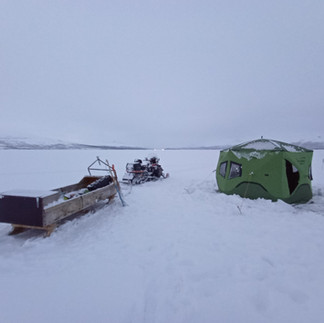
The first ice sampling at Lake Kilpisjärvi, northern Finland, happened during December 2025. The lake is located at 69° N, experiencing nearly two months without direct sunlight, with the sun lingering just below the horizon and providing a few hours of beautiful twilight each day. Whole lake had frozen couple of weeks earlier and 33 cm of clear ice with some 10-20 cm of snow made snow mobile logistics easy.
“Sampling of benthic invertebrates at -30 degrees celsius is a perfect match with project name FROST”


While there was some light available during daytime, removing the fish from nets often required headlamps. Salmonid fish, such as Arctic charr, whitefish, grayling, dominated the gill net catches.


Some days were windy making them perfect choice of laboratory work with fish and invertebrates. Both invertebrate and fish sampling required multiple collection days to get required sample amounts.


Despite the harsh conditions, the team successfully completed the sampling, capturing valuable data from this extreme winter environment. Their efforts highlight both the resilience of Arctic ecosystems and the dedication of the scientists working to understand them.




Text by Professor Kimmo Kahilainen, University of Helsinki, Finland


